

Birth Stories Aren’t About the Baby,They’re About This
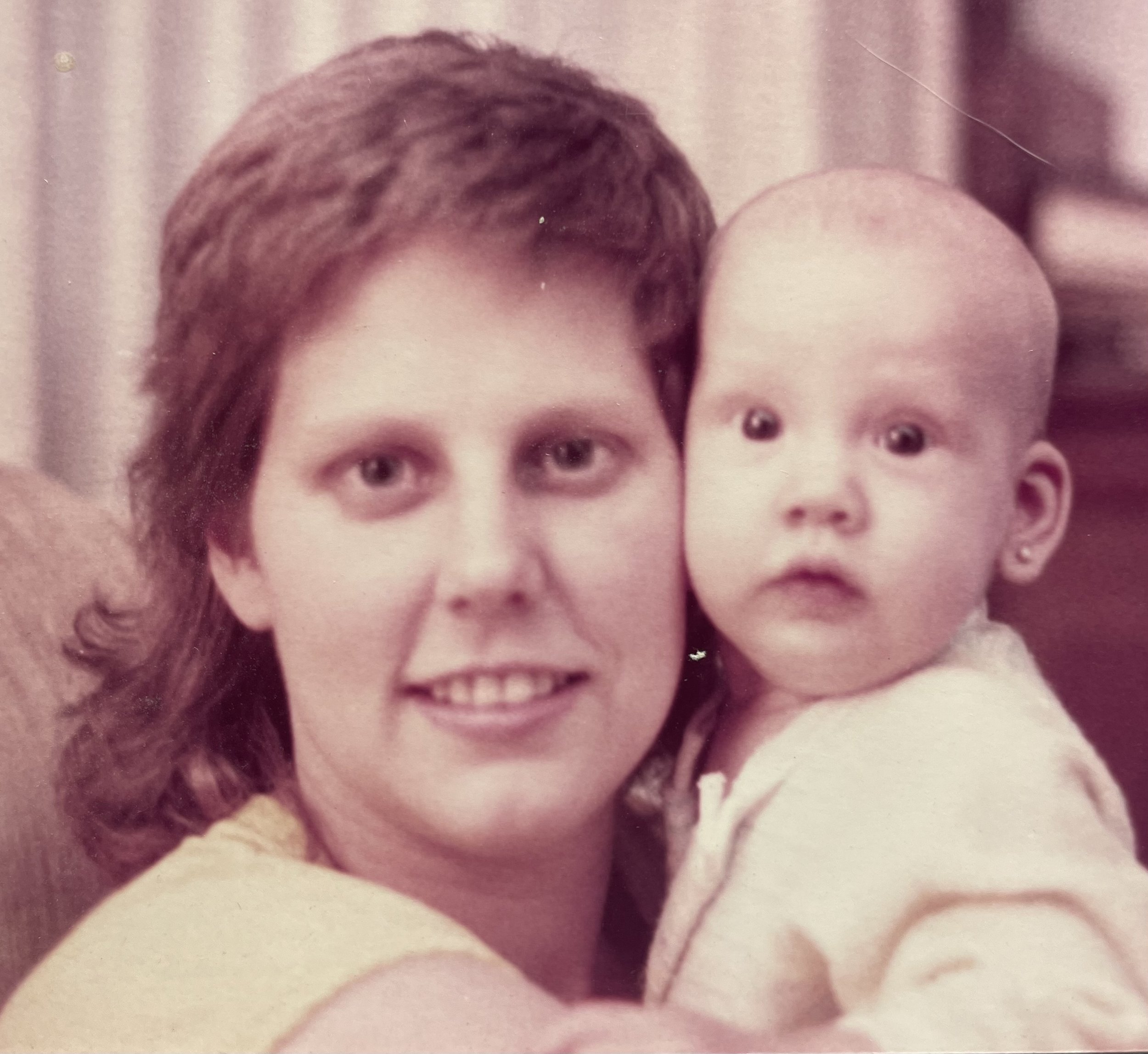
My mom went into labor with me when she was teaching a ballet class in her basement. In Burlington, North Dakota. In January. In 1983. It was snowy.
I’ve listened to my birth story many times over, and the longer I work close to birth, the more curious I am about what she remembers, still, about that night. In the last visit I had with my mom in September, I finally thought to ask about her birth recovery - only to find out she was in the middle of the final days of getting prepared for that year’s Norsk Høstfest, and her ballet company was putting on a production of Vivaldi's Four Seasons. She was up and giving directions from the wings while her breasts were leaking, and her uterus was still recovering, and my dad was recording the whole thing from the mezzanine while I snoozed in the car seat at his feet. Or maybe I was home with Grandma? I’ll have to check that…
All in all, the number of times I hear it, I’m still trying to reach back in time and find out more about my mom’s life and what the world was like that I can’t remember.
There are a couple of moments that I feel like I can see:
It’s my mom, leaning on the barre through a contraction, holding her back and taking deep breaths, while her students run through choreography a few last times before their show.
It’s my mom hobbling up the stairs, telling my dad it’s time to go.
It’s seeing my mom sitting on the edge of the back seat in the station wagon (with wood paneling) and my Dad driving, picking up his ham radio mic, telling his radio buddies he’s “running double nickels with his wife in labor,” and my mom piping up, “You better speed up or this baby is going to be born in the car.”
I love knowing these details.
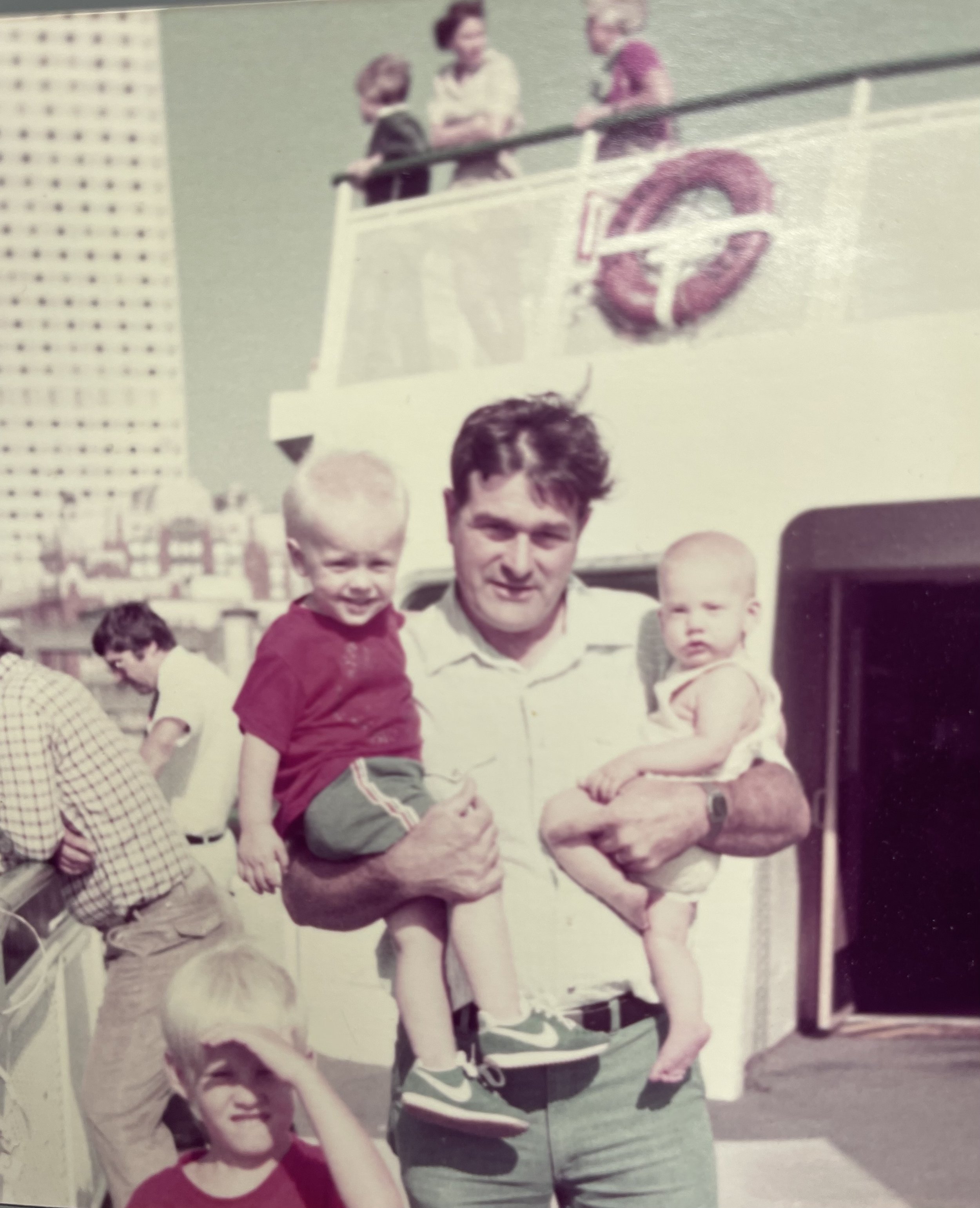
I love imagining my dad with his chop sideburns and horn snaps on his western shirt under his black, orange, and green puffer jacket. I’m sure he had his Flying-J cup full with coffee.
I love knowing my mom chose to drive an hour away to give birth with an “old-timey doctor” who supported her desire to have an unmedicated birth.
I love knowing it was fast, that my mom felt good, she made it in time, and that I was born minutes after she got there. I love knowing my dad thought I was a miracle because he thought he couldn’t have kids (even though I was the fourth. Jeez, Dad, c’mon.)
Putting it Together
A year and a half ago, I was sitting in the Burr Ridge Birth Center Classroom, listening to Mary Kay Ayers, the Chief Midwifery Officer at the time, walk the staff through the history of birth in the state of Illinois since she had become a nurse 40 years earlier.
I wish you could have been there. She offered a wonderful peek into giving care to women who were still battling twilight sleep for cesareans. She shared that the idea of a birth center was a pipe dream, and now they all sat there, working with clients and making literal dreams a reality.
She shared her own reason for becoming a midwife and asked people to share why they became a nurse or midwife. It was very moving.
Now, I’m not a midwife or a nurse, and I wasn’t even in that room in my capacity as a doula. The reason I was there was because Mary Kay asked me to be, in my capacity as the Director of Outreach and Education, but more specifically, “You can help, I just know it.”
So I sat and listened.
These women shared their stories of offering compassion and humanity to people in vulnerable times. One midwife talked about being able to see same-sex families given every opportunity to have a space to welcome their family earthside without homophobia or fear in the room. One nurse talked about how her faith compelled her to show love and give protection in a space where she felt closest to the divine. And there were many comments about how they wanted to change birth for the better, and that being part of the birth center was the kind of work they dreamed about.
I was the last person in the circle, and having been a doula for 12 years at that point, I had my elevator speech down for why I had become a doula. But today something different came out of me:
”I have benefited from knowing my birth story from as early as I could remember. My mom is always happy to share what happened and to suffer through my questions about details I think I should ask about. But it wasn’t until I started working with families that I realized how valuable a gift it was to be raised by a woman who had an empowering birth, because I’ve never questioned my right to have the same thing.
”I’ve never been afraid to question a provider. I’ve never doubted my intuition or skill to navigate labor and birth. When I went into labor the first time, I didn’t care about hospital policy or what compliance was expected of me because I was already given the cheat code, that my body is mine to do with as I see fit.
”I truly believe that the way people are brought into the world has the impact to change it for the better. And the way people are treated during childbirth is a worthy investment of time, resources, and training. I want every person to understand and have the gift I was given, to know without a doubt they have choices.”
Every time I heard my birth story growing up, I was having a pathway built that got a little clearer each time. I was creating a little more agency. A little more confidence. A little clearer road map of how I’ll walk through the world.
I got very lucky to have the mom, the birth, and the story I have about my arrival on this planet. But luck isn’t the whole story. Stories themselves are powerful teachers. Every birth story, no matter how it unfolds, holds connection, meaning, and wisdom if we’re willing to listen closely.
That’s what I’ve learned sitting in rooms like that classroom in Burr Ridge. That’s what I’ve learned standing beside families in labor. And that’s what I’ve learned from my own life: birth stories don’t just tell us what happened. They reveal who we became in the process.
So when we tell birth stories, or when we listen to them, I think these are the questions worth holding:
What was the moment you realized this birth would be different from what you expected?
What fear, doubt, or belief did you have to confront during labor, and how did it change you?
Who (or what) became your anchor in the most intense moment of the birth?
And when you first met your baby, what shifted inside you, emotionally, mentally, or spiritually?
These aren’t questions meant to measure success or failure. They’re invitations to notice the internal birth that happens alongside the physical one. The becoming that unfolds in real time.
Humans are a story-centered people. We have always been fascinated by creation stories, by origin stories, by the moments that mark before and after. Your creation story is beautiful.
Do you know it?