When to Take a Childbirth Education Class?

Preparing for a new baby comes with a long list of decisions, and one question many expecting parents ask is: When should we take a childbirth education class? These classes are designed to help parents understand labor, delivery, and the early days with a newborn. But timing matters. Take the class too early, and you might forget important details. Take it too late and you risk missing it if the baby arrives early.
While most healthcare providers recommend taking a childbirth class during the third trimester, the ideal timing can differ depending on whether you are a first-time parent or expecting another baby. Understanding the reasoning behind the timing can help you choose the best moment to learn and prepare.
What Childbirth Education Classes Cover
Childbirth education classes are designed to give parents practical knowledge and confidence heading into labor and delivery. While every program is a little different, most classes cover several key topics.
Parents typically learn about the stages of labor, and how labor progresses. Classes also introduce different pain management options, including breathing techniques, movement, medications, and some cover hospital interventions, like epidurals. Many courses include hands-on practice with comfort measures that partners can use during labor, such as massage, positioning, and coaching.
In addition, classes often explain common hospital procedures, possible interventions, and what happens immediately after birth. Some programs also include a brief overview of postpartum recovery and newborn care. The goal is not to predict exactly how birth will unfold, but to help parents feel informed, prepared, and less anxious.
The Ideal Timing for First-Time Parents
For first-time parents, childbirth education classes tend to be most helpful when taken early in the third trimester. A common recommendation is to start a class somewhere between 28 and 34 weeks of pregnancy.
At this point, many parents are starting to think seriously about labor and delivery, but pregnancy is usually still comfortable enough to attend classes and practice techniques. Taking the class during this window also helps ensure the information stays fresh leading up to the birth.
There are a few reasons why timing matters. If you take the class too early, such as in the second trimester, you may forget details by the time labor begins. Birth plans, preferences, and even hospital policies may also change during the months between learning the material and delivering the baby.
On the other hand, waiting too long can also create challenges. Late in pregnancy, parents may feel more tired or physically uncomfortable sitting through multi-hour sessions. There is also a small chance that the baby could arrive early, causing parents to miss the class entirely.
By taking a class between 28 and 34 weeks, most parents find they have enough time to absorb the information, ask questions, and practice coping techniques before the due date approaches.
When Repeat Parents Might Take a Class
Parents who have already given birth sometimes wonder if a childbirth class is still necessary. In many cases, it may not be essential. However, there are several situations where taking a refresher course can be helpful.
For example, if there has been a long gap between pregnancies (five or even ten years), many hospital practices and medical guidelines may have changed. A refresher class can provide updated information about current recommendations and procedures.
Some parents also choose to retake a class if they are planning a different type of birth. Someone who previously had an epidural might want more preparation for an unmedicated birth, while others may be switching birth settings, such as moving from a hospital to a birth center.
Another reason repeat parents return to class is to improve partner support skills. Even if the birthing parent remembers the experience, partners often appreciate reviewing techniques for providing comfort during labor.
Because refresher classes tend to be shorter and more focused, repeat parents often take them a little later in pregnancy, typically between 30 and 36 weeks.
Situations That May Change the Timeline
Certain pregnancy situations may influence when it makes sense to take a childbirth class.
Parents expecting multiples, such as twins, may want to take classes earlier, as multiple pregnancies are more likely to result in early delivery. Similarly, families experiencing a higher-risk pregnancy may prefer to complete their education around 24 to 28 weeks just in case the baby arrives sooner than expected.
Busy schedules can also affect timing. Some parents choose earlier sessions simply because they fit better into work or family commitments. In recent years, online classes have also become popular, giving families more flexibility to learn at their own pace.
How to Know the Timing Is Right
A good rule of thumb is to finish your childbirth class a few weeks before your due date, ideally before 37 weeks. This gives you time to process what you learned, discuss any questions with your provider, and practice techniques with your partner.
You will know the timing is right if you still feel comfortable attending, the information feels relevant and fresh, and you have enough time afterward to prepare.
Ultimately, childbirth education is about building confidence. First-time parents typically benefit from classes around 28 to 34 weeks, while repeat parents may choose shorter refresher courses closer to the due date. The best timing is simply the one that allows you to feel informed, prepared, and ready to welcome your baby.
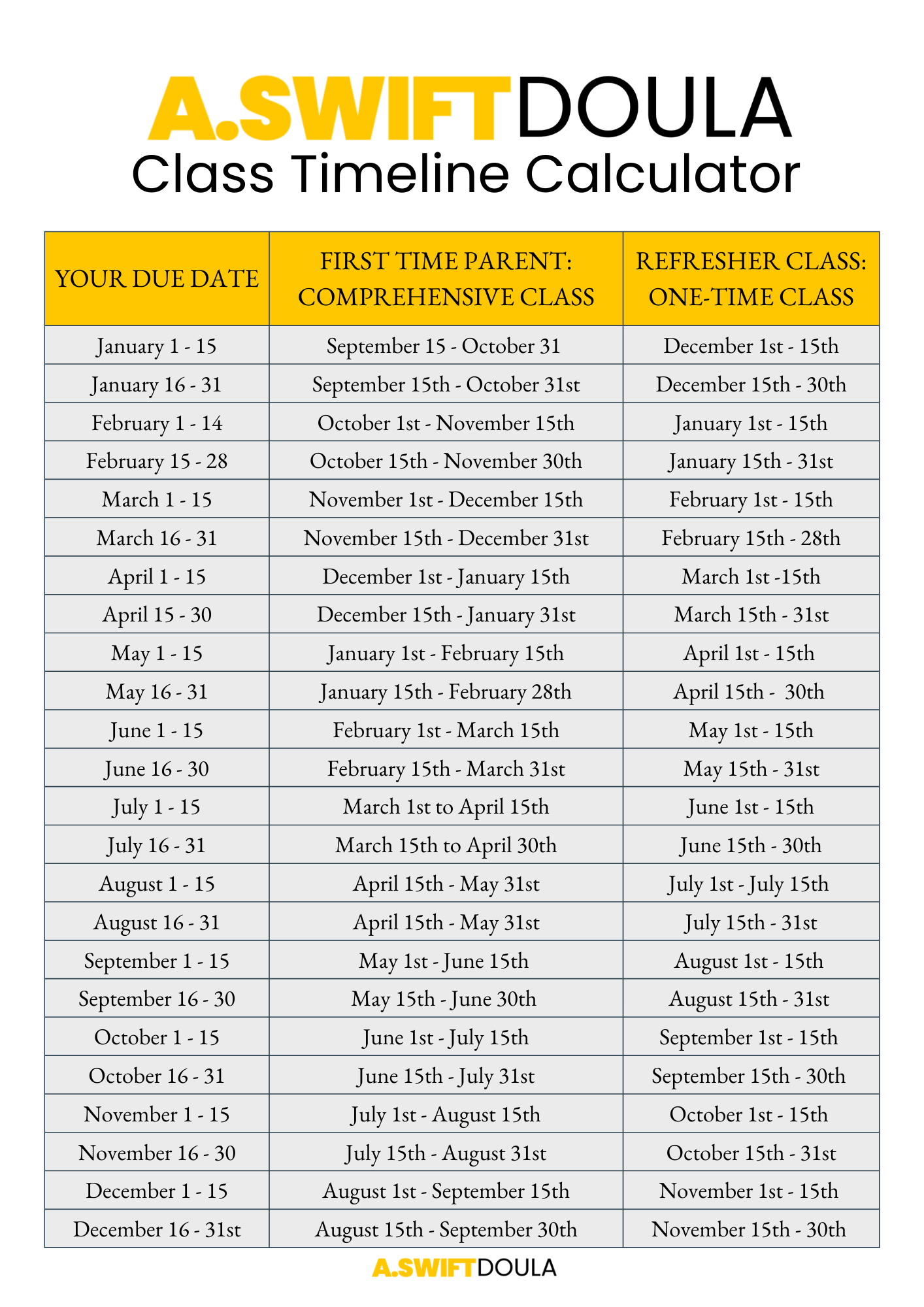
Class Timeline Calculator
Childbirth classes are most helpful when the information is still fresh as you approach your baby’s birth.
The calculator and chart below help families identify the latest recommended time to complete a childbirth education class based on their due date.
This guideline helps reduce the risk of missing class if the baby arrives early, while still keeping the material relevant and easy to remember. However, this timing should be viewed as a general guide rather than a strict rule.
Taking a class anytime before the suggested date is perfectly acceptable and often beneficial, especially for families who prefer to plan ahead or have busy schedules. The goal is simply to ensure you have enough time to learn, practice, and feel prepared before labor begins.